
Lumpkin Lawn Edging Services
Choose our expert lawn edging for a polished, professional look that boosts curb appeal and keeps your landscape neat all season long.
Get a Free QuoteOur Lumpkin Landscaping & Yard Care Services
When to Schedule Lawn Edging in Lumpkin, Georgia – Seasonal Guide
In Lumpkin, Georgia, the best times to schedule lawn edging are typically in early spring and late fall. These periods align with the region’s moderate temperatures and increased soil moisture, making it easier to achieve crisp, clean edges without stressing your turf. The climate in Lumpkin is characterized by warm, humid summers and mild winters, with neighborhoods like Stewart County Estates and areas near Providence Canyon State Park experiencing similar seasonal patterns. Timing your lawn edging around the last frost date in March and before the first frost in November helps avoid damage from sudden temperature drops and ensures your landscape looks its best year-round.
Local environmental factors play a significant role in determining the optimal schedule for lawn edging. For example, properties with heavy shade from mature oaks or pines, such as those near Lumpkin’s historic downtown, may require more frequent edging due to slower grass growth and increased moss presence. Soil type also matters—sandy soils common in the region drain quickly, while clay-heavy areas retain moisture, affecting how and when edging should be performed. For more information on local landscaping guidelines, visit the official Sudbury municipal site.
Local Factors to Consider for Lawn Edging in Lumpkin
- Tree density and shade coverage (affects grass growth and edging frequency)
- Terrain and slope (impacts water runoff and soil stability)
- Seasonal precipitation patterns (influences soil softness and ease of edging)
- Municipal restrictions or neighborhood association guidelines
- Proximity to landmarks like Providence Canyon State Park (may affect microclimates and soil types)
Benefits of Lawn Edging in Lumpkin

Enhanced Curb Appeal
Defined Landscape Borders
Reduced Weed Growth
Improved Lawn Maintenance
Increased Property Value
Professional Installation Expertise
Lumpkin Lawn Edging Types

Brick Lawn Edging
-
Metal Landscape Edging
-
Plastic Lawn Borders
-
Stone Garden Edging
-
Concrete Edging
-
Wooden Landscape Borders
-
Rubber Lawn Edging
Our Lawn Edging Process
Site Evaluation
Marking Edges
Edging Execution
Cleanup and Inspection
Why Choose Lumpkin Landscape Services

-
Lumpkin Homeowners Trust Us
-
Expert Lawn Maintenance
-
Reliable Scheduling
-
Competitive Pricing
-
Professional Team
-
Satisfaction Guarantee
-
Personalized Service
Lumpkin's Sandy Clay Loam Soils and Their Impact on Lawn Edging Depth
Lumpkin sits within the lower Piedmont-to-upper Coastal Plain transition zone of southwest Georgia, classified in USDA Hardiness Zone 8b. The predominant soils in Stewart County—including the Orangeburg, Faceville, and Tifton series identified through the USDA Web Soil Survey—feature sandy clay loam textures with moderate drainage capacity. These soil characteristics directly affect lawn edging performance and technique selection. Key considerations for edging in Lumpkin's soils include:
- Blade depth: Sandy clay loam typically allows mechanical edging to a depth of 2–3 inches, but compacted areas near sidewalks and driveways may require a half-moon edger or power stick edger for clean vertical cuts.
- Moisture timing: Edge when soil moisture is moderate—not saturated after rain or hardened during drought. Overly wet Orangeburg-series soils can smear rather than cut cleanly.
- Root intrusion: Bermudagrass and centipedegrass, common warm-season turfs in this region, produce aggressive stolons that cross hardscape boundaries quickly in sandy loam conditions.
Property owners can consult UGA Cooperative Extension publications on warm-season turf management for species-specific edging guidance suited to southwest Georgia growing conditions.
Protecting Lumpkin's Drainage Ditches and Stormwater Flow During Edging Work
Lawn edging along roadside ditches, culvert aprons, and stormwater conveyance channels in Lumpkin requires careful attention to erosion prevention and debris management. Stewart County's relatively flat terrain and sandy soils make drainage infrastructure essential for managing seasonal rainfall, particularly during the heavy precipitation months of March through September. The Georgia EPD Watershed Protection Branch oversees water quality standards that apply to sediment and debris entering local waterways, including Hodchodkee Creek and Pataula Creek corridors near Lumpkin.
When performing edging near drainage features, residents and service providers should observe the following practices:
- Do not discharge edging debris—soil clippings, sod strips, or grass trimmings—into roadside ditches or storm drainage inlets.
- Sweep or blow loose material back onto the lawn surface or collect it for disposal.
- Avoid edging within 25 feet of creek banks or pond margins to prevent destabilizing vegetated buffers.
- Schedule edging work during dry periods to minimize soil displacement into drainage channels.
For questions about stormwater infrastructure maintenance or ditch-line responsibilities along city rights-of-way, contact Stewart County Public Works.
Stewart County Public Works
P.O. Box 910, Lumpkin, GA 31815
Phone: (229) 838-6769
Official Website: Stewart County Public Works
Optimal Edging Frequency and Seasonal Timing for Lumpkin's Warm-Season Turf
Lumpkin's long growing season—typically extending from mid-March through late October—demands a consistent edging schedule to maintain clean boundaries between turf, walkways, driveways, and planting beds. The National Weather Service Tallahassee office, which covers Stewart County, reports average summer highs above 90°F and annual rainfall near 50 inches, both of which accelerate warm-season grass growth. Recommended edging intervals for Lumpkin include:
- Peak season (May–September): Edge every 2–3 weeks. Bermudagrass stolons can extend 1–2 inches beyond hardscape edges per week during peak growth.
- Shoulder season (March–April, October): Edge every 3–4 weeks as growth rates moderate with cooler nighttime temperatures.
- Dormant season (November–February): Edging is generally unnecessary, though a single late-fall pass helps define borders before winter dormancy.
- Post-rain timing: Allow 24–48 hours after significant rainfall before edging to ensure soil firmness and prevent ragged cuts.
Centipedegrass lawns, common in Lumpkin due to their low-maintenance characteristics and tolerance of acidic soils (pH 5.0–6.0), typically require less frequent edging than bermudagrass due to slower lateral spread.
How Stewart County Zoning and Right-of-Way Rules Affect Edging Along Lumpkin Streets
Property owners in Lumpkin should be aware that lawn edging along public rights-of-way, sidewalks, and road frontages may intersect with local zoning and property maintenance standards. The Stewart County Zoning Ordinance establishes land use requirements that can affect how property boundaries and frontage areas are maintained. Key considerations include:
- Right-of-way boundaries: Edging work along city streets should not extend into the public right-of-way in a manner that obstructs drainage, pedestrian access, or utility infrastructure. Verify property lines before installing permanent edging materials such as brick, stone, or metal borders.
- Sightline maintenance: At corner lots and intersections, overgrown turf edges and tall border plantings can obstruct driver visibility. Maintain edged borders at ground level within sightline triangles.
- Utility easements: Before installing below-grade edging materials deeper than 4 inches, contact Georgia 811 (dial 811) to request a utility locate and avoid damaging buried water, gas, or telecommunications lines.
Residents seeking municipal forms for property-related inquiries or permits can access them through the City of Lumpkin.
City of Lumpkin
122 West Main Street, Lumpkin, GA 31815
Phone: (229) 838-4368
Official Website: City of Lumpkin Forms
Edging Equipment Safety and Debris Containment on Lumpkin Residential Properties
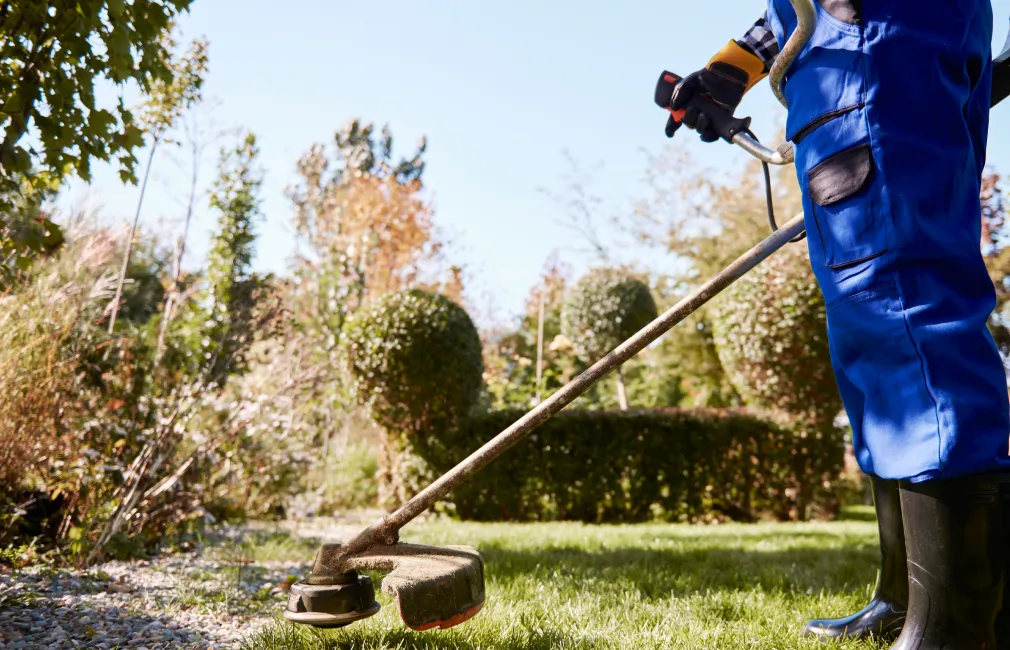
Proper equipment operation and debris management are essential components of responsible lawn edging practice in Lumpkin's residential areas. Whether using a manual half-moon edger, a powered stick edger, or a string trimmer turned vertically, operators should follow established safety protocols to protect themselves, bystanders, and adjacent property. Recommended standards include:
- Personal protective equipment (PPE): Wear ANSI-rated safety glasses, closed-toe footwear, hearing protection rated for equipment above 85 dB, and long pants during all powered edging operations.
- Debris direction: Orient powered edgers so that discharged soil and clippings are directed away from streets, vehicles, pedestrians, and neighboring properties. This is particularly important on Lumpkin's older residential streets where sidewalks and roadways are in close proximity to lawn edges.
- Equipment inspection: Check blade sharpness, guard integrity, and throttle function before each use. Dull blades tear turf rather than cutting cleanly, increasing disease susceptibility in warm, humid conditions.
- Fuel and storage: Store gasoline-powered equipment and fuel containers in ventilated areas away from ignition sources. For fire safety guidance, residents may contact local emergency services.
Stewart County Fire Departments
Lumpkin, GA 31815
Official Website: Stewart County Fire Departments
What Neighborhoods Do We Serve Throughout Lumpkin, GA?
- Downtown Lumpkin / Courthouse Square Area: This historic core features older residential lots with mature shade trees, established sidewalks, and narrow setbacks. Edging along concrete walkways and brick borders requires precision to avoid damaging historic hardscape materials, and centipedegrass is the predominant turf species in shaded yards.
- West Main Street Corridor: Properties along this corridor often have extended road frontage with roadside ditches requiring careful edging to maintain drainage flow and prevent sod encroachment into conveyance channels.
- North Broad Street Residential Area: Larger residential lots with bermudagrass lawns and open sun exposure demand more frequent edging during peak growing season due to aggressive stolon spread across driveways and walkways.
- Highway 27 Frontage Properties: Commercial and residential parcels along this state route require heightened safety awareness during edging operations due to traffic volume, and sightline maintenance at access points is critical.
- Pataula Creek Vicinity: Properties near Pataula Creek and its tributaries should observe buffer-zone precautions during edging to prevent soil and debris from entering waterways, consistent with Georgia EPD watershed protection standards.
- Stewart County Recreation Areas: Residential properties adjacent to local parks and recreation sites referenced through Stewart County Recreation and Nature may have shared boundaries requiring coordinated edging and maintenance along public-access borders.